Free Tracked UK Delivery on All Orders - Limited Stock Remaining

Written by Tomasz Nowak (Engineer)2026-05-075 min read

The Ultimate UK Guide to Car Tyres: Finding the Best Tyre Deals, Mobile Fitting, and Top Shops Near You in 2026

A practical buyer's and maintenance handbook for UK drivers comparing traditional tyre shop visits with mobile fitting services, reviewing premium brands, and explaining essential tools like cordless tyre inflators — written from real experience on Belfast roads.

Understanding Car Tyres: What UK Drivers Need to Know

Car tyre product shot

The legal minimum tread depth for car tyres in the UK is 1.6mm across the central three-quarters of the tread, around the entire circumference. Get caught below that and you're looking at a £2,500 fine per tyre plus 3 penalty points. Four bald tyres? That's 12 points. Licence gone.

I drive along the Belmont Road most mornings, and honestly, the potholes round East Belfast have got worse this spring. Bad road surfaces chew through rubber faster than you'd think. My own set needed replacing after just 22,000 miles — well short of the 30,000 I'd expected from a mid-range brand.

Here's what matters when choosing new rubber for your vehicle:

Tyre Labelling (Post-2021 EU-Retained System)

Since May 2021, UK tyre labels rate three things: fuel efficiency (A to E), wet grip (A to E), and external noise (measured in decibels). An A-rated wet grip tyre stops up to 18 metres shorter in wet conditions than an E-rated one at 80km/h. That's roughly four car lengths. On a rainy Belfast commute, that difference is everything.

The GOV.UK guidance on road-legal vehicles spells out the requirements clearly — worth a read if you're unsure about mixing tyre types or running different sizes on the same axle.

Quick Facts: The average UK driver replaces tyres every 20,000–30,000 miles. Front tyres wear faster on front-wheel-drive cars (roughly 20% quicker). Budget tyres start around £40 each for a 205/55 R16; premiums run £90–£150.

Tyre Shops vs Mobile Tyre Fitting: The Real Comparison

Mobile tyre fitting has exploded across the UK since 2023. The concept is dead simple — a van comes to your home or workplace, swaps your tyres on the spot, and you don't lose half a Saturday sitting in a waiting room reading three-year-old magazines.

But is it actually better? Not always. Here's how it breaks down.

Traditional Tyre Shops

Places like National Tyres and Halfords Autocentres offer the full package: fitting, balancing, alignment checks, and valve replacements. You can physically inspect the tyres before purchase. Most have hydraulic lifts, meaning the fitter can spot other issues — worn brake pads, corroded discs, dodgy suspension bushes.

Downsides? You'll wait 45 minutes to 2 hours. Booking slots fill fast on weekends. And if you work shifts like I do in care, finding time during shop hours is a nightmare.

Mobile Tyre Fitting Services

Mobile fitters typically charge £5–£15 extra per tyre for the convenience. They carry portable balancing equipment and can handle most standard fitments. Coverage across Northern Ireland has improved massively — I've had a van out to BT4 within 3 hours of booking., a favourite among Britain’s tradespeople

The limitation? They can't do full four-wheel alignment. And if your alloy is cracked or your hub's seized, they'll likely refer you to a garage anyway.

Tyre Shop vs Mobile Fitting: Head-to-Head Comparison (2026 UK Averages)
Factor Traditional Tyre Shop Mobile Tyre Fitting
Average cost per tyre (fitting) £8–£15 £15–£25
Wait time 45 min – 2 hours Same-day, often within 2–4 hours
Wheel balancing included Yes (standard) Yes (portable equipment)
Alignment check available Yes (£30–£50 extra) No
Weekend availability Saturday only (most) 7 days (many providers)
Valve replacement Included Usually included
Disposal of old tyres Included Included (check provider)

So what's the verdict? If you need alignment or suspect other issues, go to a shop. If you just need fresh rubber fitted and you're short on time, mobile fitting is brilliant. Sorted either way.

Best Car Tyres Deals in the UK This Spring

Prices have stabilised after the raw material spikes of 2023–2024. Natural rubber futures dropped 12% in Q1 2026, and that's filtering through to retail. Right now is genuinely a decent time to buy.

Where to Find the Best Prices

Online-first retailers consistently undercut high-street shops by 15–25% on the same product. The trade-off is you'll need to arrange fitting separately or use their partner network. Costco's tyre centre remains one of the best-value options if you hold a membership — their all-in price includes fitting, balancing, valve, and lifetime rotation.

My mate swears by buying online and booking mobile fitting. He saved £47 across four tyres last month doing exactly that versus his local garage's quote. Hard to argue with the maths.

Seasonal Buying Tips

January and September tend to see the best promotions. Manufacturers push cashback offers (Michelin ran a £40 cashback on sets of 4 in early 2026). Black Friday deals are hit-and-miss for tyres specifically, but worth watching. The Which? tyre reviews section tracks price fluctuations and runs independent wet-braking tests — useful for cutting through marketing noise.

2026 Price Snapshot (205/55 R16, one of the UK's most common sizes):
Budget (e.g., Westlake, Sailun): £40–£55 per tyre
Mid-range (e.g., Hankook, Firestone): £60–£85 per tyre
Premium (e.g., Michelin, Continental): £90–£140 per tyre

Premium Brands: Are Michelin and Continental Worth the Extra Spend?

Short answer: yes, but with caveats. Premium tyres consistently outperform budgets in independent wet-braking tests — typically stopping 3–5 metres shorter from 60mph. They also last longer. A Michelin Primacy 4+ averages 32,000 miles versus 18,000–22,000 for a budget equivalent.

Look, I know the price seems steep when you're staring at £520 for a set of four versus £200. Spread that over the lifespan, though, and the cost-per-mile often works out similar. You're also getting better fuel economy — an A-rated rolling resistance tyre saves roughly £50–£80 in fuel annually compared to an E-rated one.

Brand Breakdown

Michelin: Excellent longevity. The Primacy 4+ and CrossClimate 2 are standout performers. Wet grip is consistently A-rated. They're quiet too — 67dB external noise on the Primacy 4+.

Continental: Slightly sharper handling feel. The PremiumContact 7 launched in late 2025 and early reviews are spot on. Marginally shorter tread life than Michelin in my experience — maybe 28,000 miles., meeting British quality expectations

Bridgestone: Solid all-rounder. The Turanza T005 is a decent motorway tyre. Not quite as refined as the top two but priced £10–£15 lower per unit.

That said, if you're doing under 8,000 miles a year on mostly urban roads, a mid-range Hankook or Falken will serve you perfectly well. No point paying premium prices for a car that barely sees the motorway.

Car Tyre Inflators: Your First Line of Defence Against Underinflation

Tyre pressure and specifications infographic

An underinflated tyre by just 0.3 bar (roughly 4 PSI) increases fuel consumption by 2% and accelerates shoulder wear dramatically. Most drivers don't check pressures until something feels wrong — by which point you've already lost tread life. A decent cordless inflator in the boot solves this completely.

I picked up a cordless compressor last autumn after getting caught out with a slow puncture on the Newtownards Road at 11pm. Garage air machines were either broken or miles away. Never again. (Lesson learned the cold way, standing on a kerb in the drizzle.)

What to Look For in 2026

The market's moved heavily toward cordless, digitally-controlled units. The key features that matter:

  • Auto-stop technology — set your target PSI and it cuts off automatically. No more guessing.
  • Digital gauge accuracy — look for ±1 PSI or better
  • Battery life — enough to inflate at least 4 tyres from flat on a single charge
  • Portability — under 1kg is ideal for keeping in the boot permanently

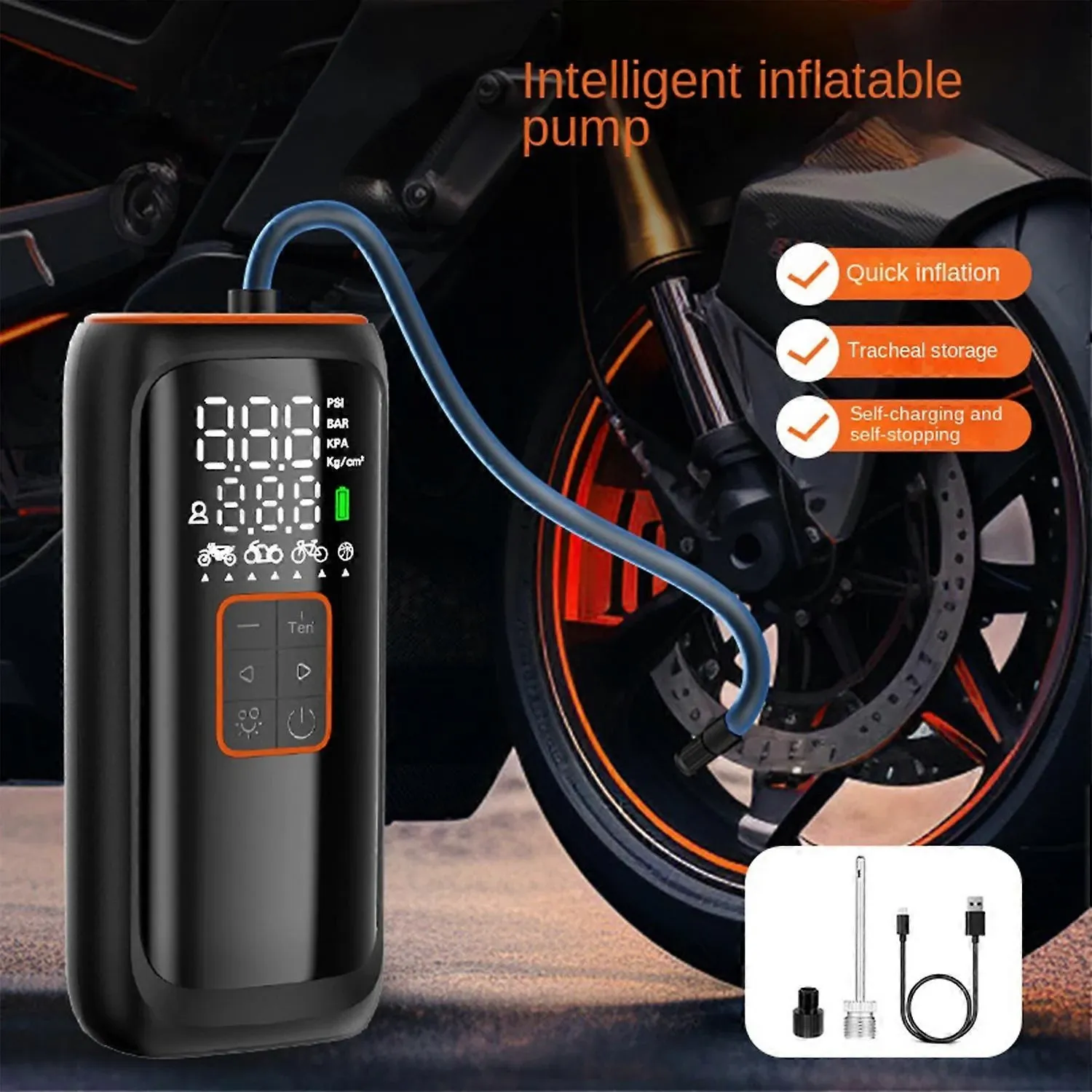
The lmcllpor cordless air compressor at £43.52 hits a sweet spot. It's got smart digital sensing with auto-stop, works on cars, bikes, and SUVs, and it's properly compact. Compared to the Ring RTC4000 (around £55) or the Worx WX092 (£70+), it's decent bang for your buck while still offering the digital precision you need.

lmcllpor Cordless Air Compressor — Key Specs:
Price: £43.52
Type: High-speed cordless
Features: Smart digital sensing, auto-stop technology
Compatibility: Cars, bikes, SUVs
Best for: Boot storage, emergency inflation, regular pressure maintenance

I've tried cheaper alternatives — the sub-£20 12V plug-in units — and they just don't cut it. Slow, inaccurate, and the cables are never long enough to reach the rear offside wheel without repositioning the car. Cordless is the way forward.

Essential Tyre Maintenance for UK Conditions

UK roads are brutal on rubber. We get freeze-thaw cycles from November through March, standing water year-round, and road surfaces that would embarrass a developing nation. Here's what actually keeps your tyres lasting.

Monthly Pressure Checks

Check pressures cold — before driving or within the first mile. Warm tyres read 3–5 PSI higher than cold, which throws off your numbers. Your correct pressures are on the door jamb sticker or in the owner's manual. They vary by load — if you're carrying four passengers and luggage, you'll need the "full load" figure, typically 2–4 PSI above standard.

Rotation Schedule

Rotate front-to-rear every 6,000–8,000 miles. This evens out wear patterns, especially on front-wheel-drive cars where the fronts handle steering, braking, and drive forces simultaneously. Some garages include rotation free with a service — always worth asking., popular across England

Alignment and Tracking

If your car pulls to one side or you notice uneven wear across the tread face, get the alignment checked. A proper four-wheel alignment costs £40–£70 and can save you hundreds in premature tyre replacement. Potholes knock alignment out regularly — after any significant impact, it's worth a check. (Belfast drivers, you know exactly what I mean.)

The HSE guidance on workplace vehicle tyres covers commercial requirements, but the maintenance principles apply equally to private cars. Regular inspection prevents blowouts — and blowouts at motorway speed are genuinely terrifying.

Storage (If Running Seasonal Sets)

Store unused tyres vertically, away from direct sunlight and heat sources. UV degrades rubber compounds. Ideal storage temperature is 10–25°C. If you're running winter tyres from November to March — increasingly common in Northern Ireland — proper storage extends the summer set's life by years.

Frequently Asked Questions

How often should I replace my car tyres in the UK?

Most UK drivers need new tyres every 20,000–30,000 miles, or roughly every 3–4 years for average annual mileage of 7,400 miles. Tyres older than 5 years should be inspected annually regardless of tread depth, as rubber compounds degrade over time. Check the DOT date code on the sidewall — four digits indicating week and year of manufacture.

Is mobile tyre fitting safe and reliable?

Yes, reputable mobile fitters use portable hydraulic jacks, torque wrenches calibrated to manufacturer specs (typically 110–120 Nm for standard cars), and portable wheel balancers. They carry full insurance and dispose of old tyres legally. The main limitation is they can't perform four-wheel alignment, which requires fixed equipment costing £20,000+.

What PSI should my car tyres be?

Correct tyre pressure varies by vehicle and load — typically between 30–36 PSI for standard passenger cars. Your specific figures are printed on the driver's door jamb sticker and in the owner's manual. Always check pressures cold (before driving). Underinflation by just 4 PSI increases fuel consumption by approximately 2% and accelerates edge wear significantly.

Are budget tyres safe for UK roads?

Budget tyres meet minimum legal safety standards but perform measurably worse in wet braking — typically stopping 3–8 metres longer from 60mph compared to premium equivalents. For high-mileage motorway drivers, premium or mid-range tyres offer meaningfully better safety margins. For low-mileage urban driving under 8,000 miles annually, quality budget brands like Hankook Kinergy Eco are a reasonable compromise.

How much does a cordless tyre inflator cost in 2026?

Cordless tyre inflators range from £25 for basic models to £80+ for premium units. The sweet spot for reliability and accuracy sits around £40–£55. The lmcllpor cordless compressor at £43.52 offers smart auto-stop and digital sensing. Higher-end options like the Worx WX092 (£70+) add features like LED lighting and higher maximum PSI ratings for commercial use.

Can I mix different tyre brands on my car?

You can legally mix brands in the UK, but tyres on the same axle must be the same size, speed rating, and load index. Mixing brands across axles (e.g., Michelin fronts, Continental rears) is acceptable and common. Never mix radial and cross-ply tyres on the same axle — this is illegal. For best handling, matching all four is ideal but not required.

Key Takeaways

  • Check tread depth monthly — the UK legal minimum is 1.6mm, but grip deteriorates noticeably below 3mm, especially in wet conditions.
  • Mobile tyre fitting saves time but costs £5–£15 extra per tyre; traditional shops remain better for alignment and complex issues.
  • Premium car tyres cost more upfront but typically deliver 30–50% longer tread life and measurably shorter stopping distances (3–5 metres at 60mph).
  • A cordless tyre inflator (£40–£55 range) pays for itself by preventing underinflation damage — the lmcllpor unit at £43.52 offers smart auto-stop for accurate, hassle-free inflation.
  • Buy tyres in January or September for the best deals; manufacturer cashback offers can save £20–£40 per set of four.
  • Rotate tyres every 6,000–8,000 miles front-to-rear to equalise wear and extend overall set life by up to 20%.
  • Always check pressures cold and use the vehicle-specific figures from your door jamb sticker, not a generic number.

Ready to upgrade your roadside kit with LMCLLPOR?

Secure Your Peace of Mind — £54.76