How to Maintain Car Tyres at Home: A UK Guide
Short answer: to maintain car tyres at home, do four simple things regularly — check the pressure monthly when the tyres are cold, keep the tread above the 1.6mm legal minimum, look over each tyre for cuts, bulges and objects, and make sure any tyre-pressure warning system is working. Doing this yourself catches the common MOT failures early, keeps wear even and makes your tyres last longer, so you are not paying a garage to tell you what you could have checked in ten minutes.
Tyres are the most expensive MOT surprise nobody warns you about. If money is tight in the month your test is due, the smart move is to check the things a tester checks before you hand the keys over — so there are no nasty extras, and no feeling that you are being talked into work you cannot verify. Here is how to maintain car tyres at home in the UK, with the facts you can quote back at the garage.
1. Check the pressure monthly (and before the MOT)
Under-inflated tyres wear unevenly and wear out faster, and running low quietly costs you fuel — so correct pressure is one of the cheapest ways to make a set last. Use the figure on the sticker inside the driver's door frame or fuel-filler flap, set it while the tyres are cold, and check all four plus the spare. A quick top-up on the driveway with a cordless inflator takes minutes; the full routine is in how to check tyre pressure at home.
2. Keep the tread above 1.6mm
In the UK the legal minimum tread depth for cars is 1.6mm, and it must be met across the central three-quarters of the tyre, around its entire circumference. Below that a tyre is not just an MOT failure — it is illegal, carrying a fine of up to £2,500 per tyre and three penalty points. A simple home test: insert a 20p coin into the main grooves; if you can see the coin's outer band, the tread may be close to the limit and it is time to get it measured. Many safety bodies suggest replacing nearer 3mm for wet-weather grip, well before the legal line.
3. Look over each tyre for damage
Once a month, and before any long trip, run your eyes and hand around each tyre. You are looking for cuts deep enough to reach the internal cords, bulges or lumps (a sign of internal damage), objects like screws embedded in the tread, and cracking in the rubber. Any of these can fail an MOT and, more importantly, can fail on the road — so if you find a bulge or a deep cut, get it checked before driving on it.
4. Make sure the pressure warning system works
If your car was registered from 1 January 2012, its tyre-pressure monitoring system (TPMS) must be working for the MOT: a warning light showing a system fault during the test is a major defect and an automatic failure. A light that simply means a tyre is low is usually an advisory, not a fail — but either way you should act on it. If the light stays on after you have corrected the pressures, the system may need a reset or a sensor seen to before the test. More on that in what the tyre pressure warning light means.
Habits that make tyres last longer
- Correct pressure, always: the single biggest lever on even wear and tyre life.
- Gentle inputs: harsh braking, kerbing the wheels and hitting potholes all shorten tyre life and knock the tracking out.
- Watch wear patterns: wear on one edge often points to alignment or suspension, so get tracking checked rather than just fitting new rubber.
- Don't overload: use the full-load pressure when carrying a heavy load or towing.
Where an inflator fits in
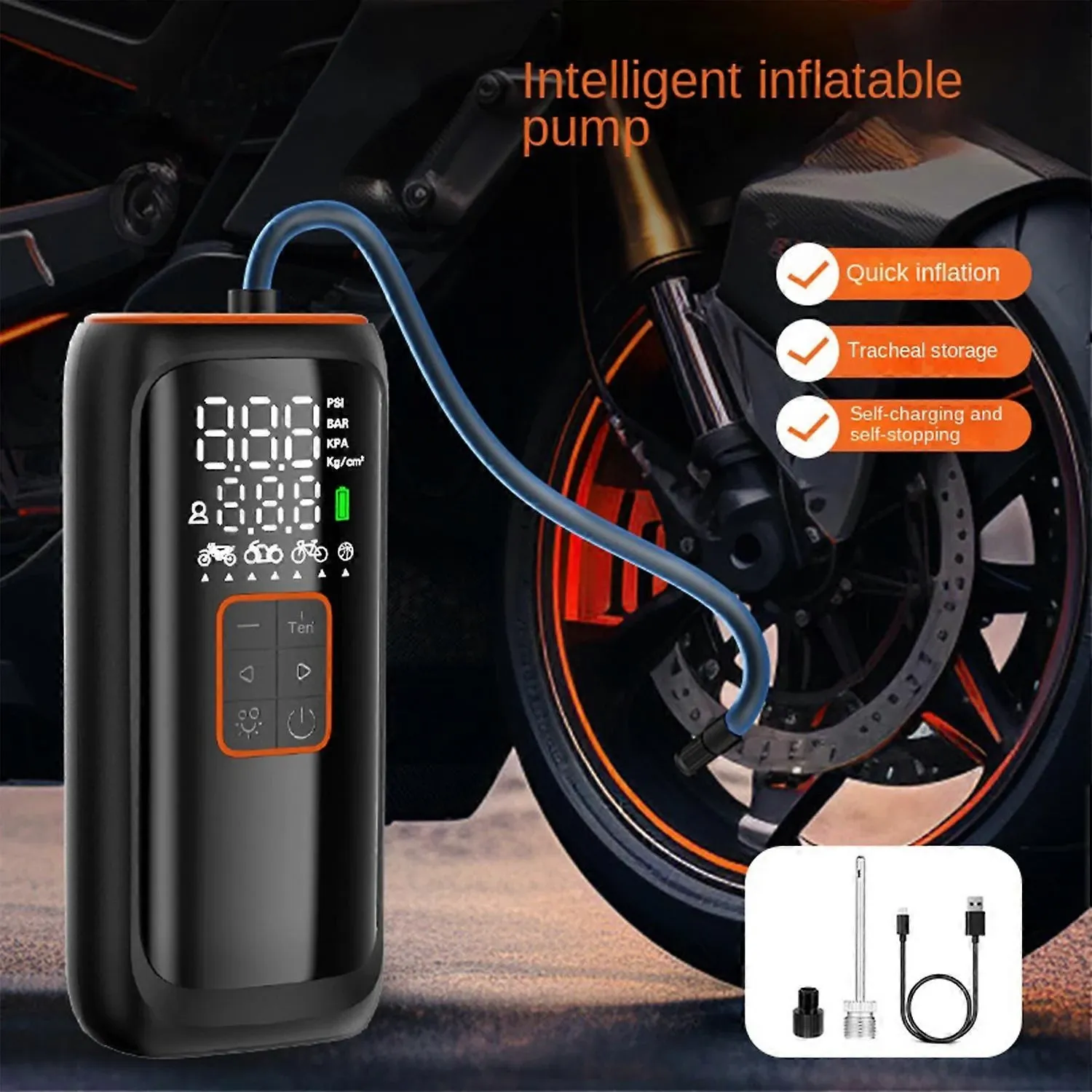
Most of home maintenance is checking; the one active job is keeping pressures right, and that is where a good pump helps. The cordless LMCLLPOR Digital Tyre Inflator (£54.76) reads to ±1 PSI and stops at your preset, so monthly top-ups and the pre-MOT check are a two-minute job per wheel — with free tracked UK next-day delivery, 30-day returns and a 12-month warranty. It will not, of course, do anything about tread or damage; those you check by eye and by coin as above.
New to all of this? Start with the beginner's guide to car tyre inflators.
Honest limits
Home checks catch the obvious problems and keep you legal between services, but they do not replace a professional inspection — internal damage and alignment need proper equipment. If in doubt about a bulge, a slow puncture or an uneven wear pattern, have it looked at. Home maintenance is about catching issues early and not overpaying, not about doing the garage's job.
Frequently asked questions
How often should I check my car tyres at home?
Check the pressure at least once a month and before any long trip, when the tyres are cold, and give each tyre a quick visual check for cuts, bulges and embedded objects at the same time. Check the tread depth regularly too.
What is the legal tyre tread depth in the UK?
1.6mm, measured across the central three-quarters of the tyre and around its entire circumference. Below that the tyre is illegal and an MOT failure, with a fine of up to £2,500 per tyre and three penalty points.
Will low tyre pressure fail an MOT?
A tyre-pressure warning light showing a system fault fails the MOT on cars registered from January 2012. A light that simply shows a tyre is low is usually an advisory rather than a fail, but you should still correct it.
Does keeping the right tyre pressure make tyres last longer?
Yes. Correct pressure keeps wear even and stops the shoulders or centre wearing out early, so the tyres last longer and use less fuel. It is one of the cheapest ways to protect an expensive set of tyres.
Ready to sort your tyres in minutes? The LMCLLPOR Digital Tyre Inflator is cordless, reads to ±1 PSI and stops on its own at your preset — £54.76 with free tracked UK next-day delivery, 30-day returns and a 12-month warranty.